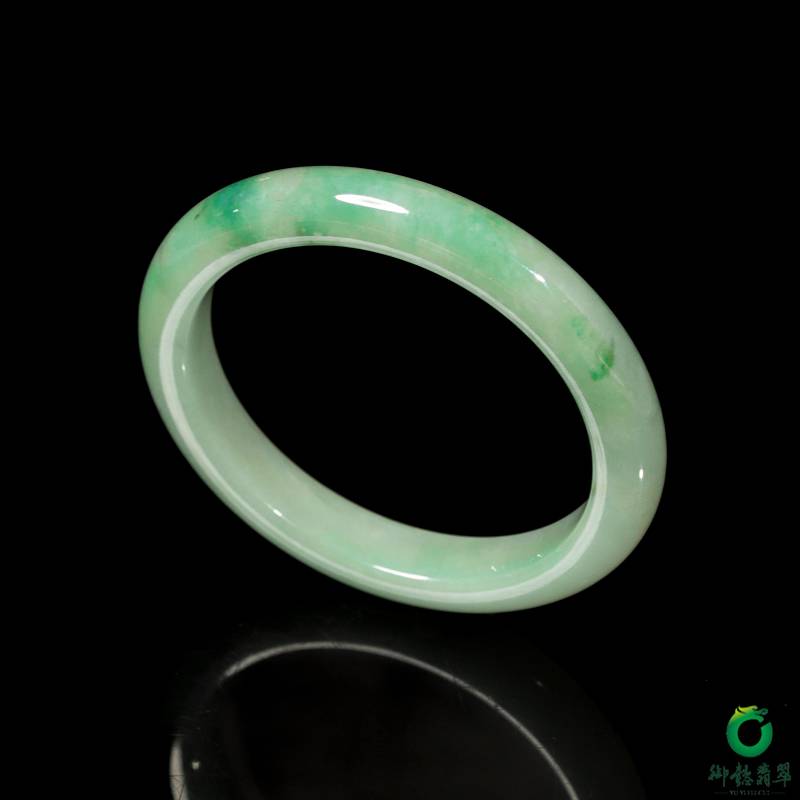
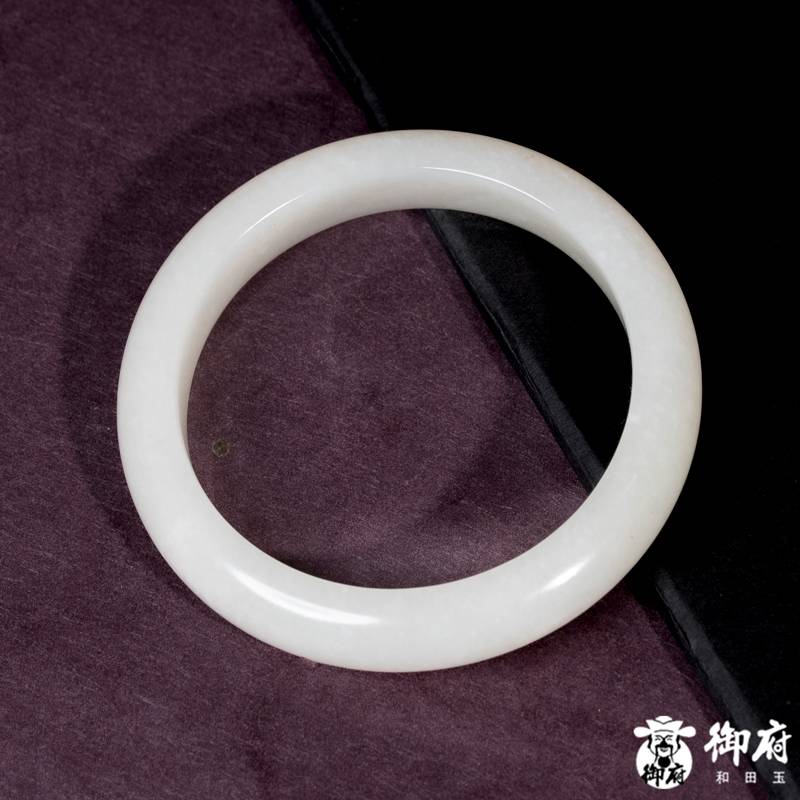
A jade bangle is one carved ring - it has no clasp and no adjustment. That is why the inner diameter in millimetres, not a letter size, is the number that decides whether a bangle goes on comfortably and stays on safely. This guide walks through measuring your own hand, comparing it with a listing, and the extra steps for oval bangles.
Why inner diameter matters more than hand width
Your wrist is smaller than your hand, so the hand must pass through the bangle opening before the bangle rests on the wrist. The widest part of the hand is normally across the knuckles with the thumb folded in. A bangle that passes that point easily but is not much larger will sit securely; a bangle that is too large can slip off, and one that is too small simply will not go on.
Because hands are three-dimensional and slightly compressible, the same hand can often wear two neighbouring bangle sizes. A difference of 1-2 mm can feel noticeably different in daily wear, so it is worth being precise about your own measurement and honest with yourself about how snug you want the fit.
How to measure at home
Use a flexible tape measure if you have one. If you only have a ruler and string, follow the same steps and lay the string flat against the ruler afterwards.
- Fold your thumb against your palm so it touches the base of your little finger. This is the position the hand takes when passing through a bangle.
- Wrap the tape around the widest part of the hand, across the knuckles. Keep it snug but not tight.
- Read the circumference in millimetres. Write it down - most adult hands measure between roughly 190 mm and 230 mm around.
- Compare it with the inner diameter on the listing. As a rough guide, smaller hand circumferences (around 190-200 mm) usually suit inner diameters of about 52-54 mm, average hands (200-215 mm) about 55-57 mm, and larger hands (215 mm and above) about 58-61 mm. These are starting points, not promises - your hand shape and how tight you like the fit change the result.
- If you are between sizes, choose the larger one only if you like a looser feel; otherwise ask us with your exact circumference in millimetres before ordering.
Measure twice, especially if you are buying a gift. Hands change slightly through the day and with temperature, so take the measurement when your hand is relaxed and at room temperature.
What if my hand measurement is between two sizes?
Send us the circumference in millimetres together with the listing you are considering. For round bangles we can advise whether the smaller or larger diameter is the safer choice for your hand; for oval bangles the decision depends on the width of your hand rather than the wrist alone.
Do oval (Guifei) bangles measure the same way?
An oval opening is measured at its widest point, but the shape sits closer to the wrist than a round bangle of the same number. Oval bangles suit many hands well, yet they need the hand measurement checked carefully because the narrower axis gives less margin. If a 52 mm oval is your first bangle, measure your hand twice and ask us before ordering.
What should a seller show me before I buy a bangle?
The inner diameter in millimetres, the weight, photographs from several angles, and the condition of the stone. For a used or antique bangle, ask whether the size is measured at the widest point and whether the stone shows any repair, fill or inner cracking.
Checklist before you order
- Your hand circumference in millimetres is written down.
- You compared it with the exact inner diameter on the listing, not with a letter size.
- You asked the seller about fit when you are between sizes.
- For oval bangles, you confirmed how the opening was measured.
You can compare live examples on our jadeite bangles and Hetian jade bangles pages, where every listing shows the inner diameter in millimetres.
Sources: Gemological Institute of America (GIA) education pages on jadeite and nephrite; National Gemstone Testing Center (NGTC) at ngtc.org.cn. Always confirm any certificate with the issuing laboratory.